
LHRC Brings Stakeholders Together Under J4S HAKI SHIELD PROJECT to Protect the Rights of GBV Survivors
Dar es Salaam, June 18, 2026
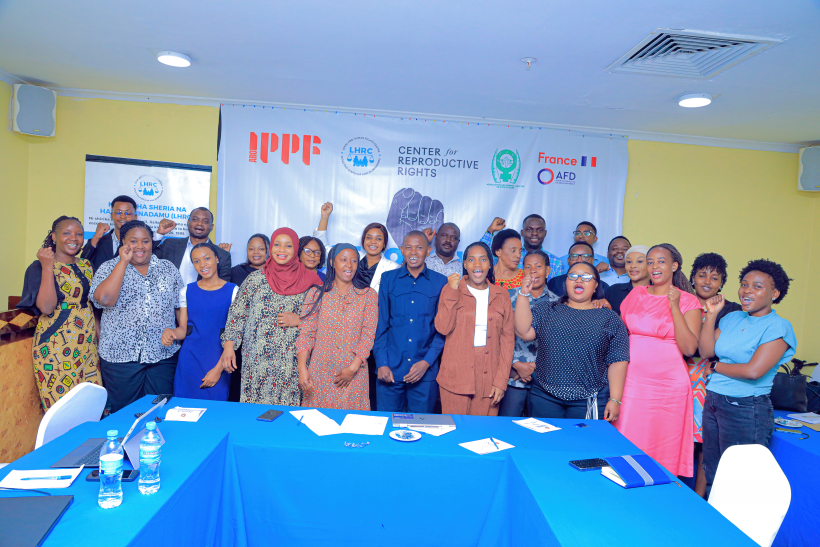
Legal and Human Rights Centre (LHRC) convened key stakeholders involved in the prevention and response to gender-based violence (GBV) during an inception meeting for the implementation of the Justice for Survivors (J4S) – HAKI SHIELD (Rights are Protected) Project, held at Seashells Hotel in Dar es Salaam.
The meeting brought together representatives from the Tanzania Police Force Gender and Children's Desks, social welfare officers, lawyers, paralegals, doctors, nurses, healthcare providers, and other key actors involved in delivering services to survivors of gender-based violence.
The HAKI SHIELD Project is being implemented in Kinondoni and Temeke districts with the aim of strengthening access to justice for survivors of gender-based violence, particularly women and girls. The project adopts a survivor-centred approach while seeking to strengthen legal, policy and service delivery systems that support survivors.
Speaking during the meeting, LHRC’s Director of Empowerment and Human Rights Response, Advocate Deogratius Bwire, said that the project was designed to address persistent challenges that continue to hinder efforts to prevent and respond to gender-based violence, including limited access to justice, weak referral systems, inadequate psychosocial support services, and socio-cultural barriers that perpetuate violence.
“This project was designed to address challenges affecting efforts to prevent and respond to gender-based violence, including limited access to justice, weak referral mechanisms for survivors, inadequate psychosocial support services, harmful cultural practices, and gaps within legal and policy frameworks aimed at protecting survivors of gender-based violence,” said Advocate Bwire.
This project is reflected in the realities documented through LHRC’s human rights monitoring work. According to LHRC’s 2025 Human Rights Report, a total of 268 cases of violence against women were recorded. Of these cases, more than 62 percent involved physical or psychological violence, 31 percent involved sexual violence, while 7 percent were related to economic violence.
The report further indicated that incidents of sexual violence increased from 25 percent in 2024 to 31 percent in 2025, highlighting the urgent need to strengthen protection mechanisms and improve access to justice and support services for survivors.
In addition, LHRC documented 25 cases of Intimate Partner Violence (IPV) in 2025, bringing the total number of recorded cases since 2021 to 184. Of these cases, 72 percent resulted in Intimate Partner Homicides (IPH), with women remaining the primary victims.
Despite these figures, many incidents of gender-based violence remain unreported due to fear, stigma, economic dependency, and social pressure, preventing many survivors from seeking justice and accessing essential services.
Through the HAKI SHIELD Project, LHRC aims to strengthen prevention, protection, and response mechanisms for survivors by improving access to legal aid and psychosocial support services, increasing public awareness on gender-based violence, promoting collaboration among institutions, and advocating for legal and policy reforms that better protect survivors.
“This project recognizes that success in preventing and responding to gender-based violence requires close collaboration among government institutions, law enforcement agencies, service providers, community leaders, and civil society organizations,” Advocate Bwire added.
Participants at the meeting discussed strategies for strengthening coordination among institutions responsible for handling gender-based violence cases to ensure that survivors receive timely and comprehensive support, from reporting incidents and accessing healthcare services to obtaining psychosocial support, legal assistance, and pursuing justice through formal legal mechanisms.
Through this collaboration, LHRC expects to contribute to a more survivor-friendly service delivery system that responds effectively to survivors’ needs and enables them to access justice in a timely and dignified manner.
The HAKI SHIELD Project is expected to play a significant role in strengthening efforts to combat gender-based violence in Dar es Salaam, particularly in Kinondoni and Temeke districts, by ensuring that the rights, safety, and dignity of survivors are protected and upheld at all times.

