
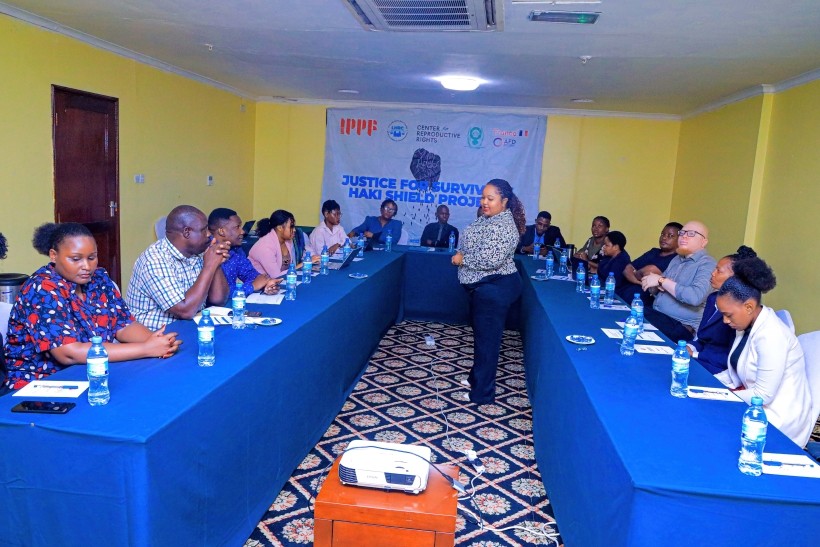
From Response to Survivor hood: LHRC Convenes Practitioners for a Survivor Centered Approach to GBV
How do we usually measure a good GBV response? Mostly by speed. How fast a survivor was rescued, treated, referred, or how quickly a case got opened. A two day training under the Haki Shield – Justice for Survivors (J4S) Project asked a harder question than that: what happens after the response, and what are we actually doing to stop the violence from happening again?
In the room were legal aid providers and paralegals, community monitors, social welfare and child protection officers, health workers, police, lawyers and psychologists, everyone who touches a survivor's journey at some point. Two days spent reflecting on how their roles connect, and honestly, where they still fall short of each other.
Response is not the end of the journey
Tanzania already has the systems and the professionals to respond to GBV. Survivors can be rescued, treated, examined, referred. So why does the violence keep happening? That single question pulled the conversation away from response alone and into prevention and accountability, including how existing laws and community by-laws can actually be used to hold people to account.
Safety comes first, always
A survivor centered approach really comes down to one question: what does this person need right now? Participants worked through what it means to listen without blame or judgement, to notice when someone needs psychological support, and to make sure the very system a survivor turns to doesn't end up hurting them further. It got distilled into four words: listen, protect, support, refer.
Coordination is not optional
A good chunk of the two days went into the seams between institutions, the exact places where survivors tend to fall through the cracks. Health workers and police walked through tools like the PF3 and how medical documentation feeds into investigations. There was real discussion on why One Stop Centers matter, bringing health, police, legal and psychosocial support under one roof, and why strong referral networks and clear communication between providers matter even more where those integrated services don't fully exist yet.
Why does GBV continue when people already know it is wrong
Because knowing something is wrong doesn't automatically stop it. Participants named the drivers that actually keep violence alive: shame, stigma, victim blaming, silence, economic dependence, family pressure, and a normalization of violence that runs quietly through everyday life. One idea kept resurfacing: silence protects perpetrators, and a perpetrator who is never held accountable is free to harm someone else.
We are all policymakers
Maybe the most striking reframe of the training was this: policy isn't only written in government offices. It's written in homes and communities too, every time a family decides what to excuse and a community decides what it will tolerate. When families and communities choose to reject violence and insist on accountability, they become part of the system that protects survivors, instead of the one that fails them.
Empowerment is prevention too
The conversation also widened to economic violence, and how economic dependence can trap someone, limiting their ability to leave, seek help, or make choices at all. Strengthening a person's economic and social standing isn't separate from GBV prevention. It is prevention.
From victim to survivor
Perhaps the biggest shift in the room was conceptual. Someone who has experienced violence carries the weight of that experience, at least for a while. But when they're listened to, protected, supported, and connected to the right services, something in that shifts. The training framed this as the movement from victimhood to survivorship, and pushed practitioners to measure their work not just by how many people they responded to, but by what that response actually made possible. Did the person feel heard? Were they safe? Did they regain a sense of agency? Was there any accountability for what happened to them?
Building a system where no survivor gets lost
A single survivor might pass through a paralegal, a police officer, a health worker, a social welfare officer, a psychologist and a lawyer, all within one journey. Each of those actors carries a different piece of responsibility, but for the survivor, it's just one journey. That's really the goal of this training, and of the Justice for Survivors project as a whole: a system where that journey actually holds together, where coordination replaces isolation, and where the survivor's safety, dignity and choices stay at the centre from first contact all the way through recovery.
Responding to violence matters. But preventing the next survivor from ever experiencing it matters just as much. That's the work of building a just and equitable society, one survivor, one system, one accountable community at a time.

