
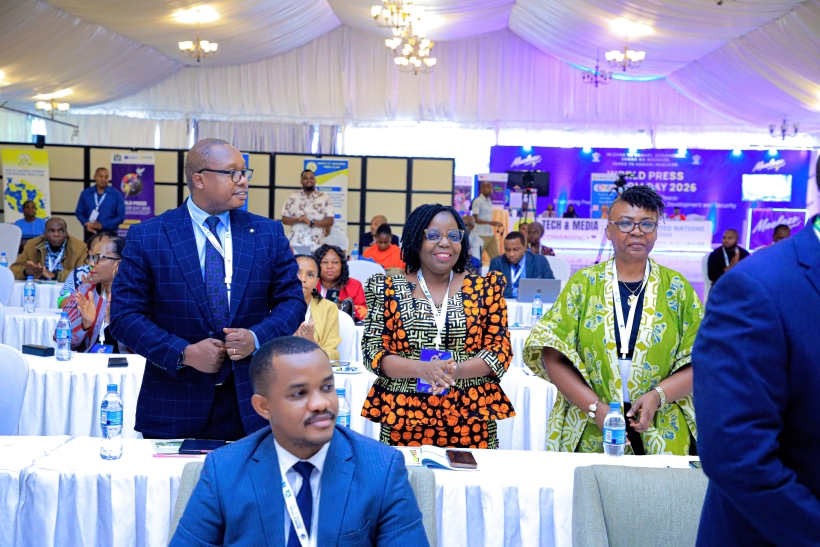
LHRC participates in World Press Freedom Day 2026 in Arusha, highlighting how fear and intimidation silenced media during the 2025 elections.
Legal and Human Rights Centre (LHRC) is participating in the national commemoration of World Press Freedom Day 2026, marking the 33rd anniversary of the event in Tanzania, currently taking place in Arusha. The three-day event has officially commenced on April 28, 2026, and is expected to conclude on April 30, 2026, at Mount Meru Hotel, featuring discussions, exhibitions, and various activities aimed at strengthening the media sector.
This year’s commemoration has been guided by the theme: “Shaping a Future at Peace: Promoting Press Freedom for Human Rights, Development and Security.” bringing together key stakeholders in the media sector to discuss press freedom, innovation, and digital transformation in the industry.
During the three-day event, LHRC has been among the key participants, engaging alongside journalists, editors, policymakers, civil society organizations, and digital content creators in discussions on the future of the media sector in Tanzania. As part of its participation, LHRC has been operating an exhibition booth where it has continued to provide legal aid services to the public, distribute human rights publications, and offer legal education to citizens visiting the booth.
In addition to these activities, the Executive Director of LHRC, Dr. Anna Henga, has actively contributed to various panel discussions and media engagements, addressing critical issues affecting the media sector in the country.
Speaking on media innovation, Dr. Henga emphasized that lack of press freedom remains a major barrier to creativity and innovation among journalists. “You cannot have innovation in an environment where there is no freedom. When media outlets operate under fear of being shut down, innovation dies,” said Dr. Henga.
In an interview with journalists attending the commemorations, Dr. Henga further noted that the state of press freedom in Tanzania remains unsatisfactory, highlighting that fear and intimidation have significantly hindered journalists from performing their duties effectively.
She explained that during and after the 2025 general elections, many journalists were unable to report on incidents of human rights violations due to fear of media shutdowns, arrests, or other administrative actions. “There was widespread fear. Many journalists could not report the reality of what was happening due to threats and fear of closure,” she added.
According to Dr. Henga, this situation created a significant information gap for the public and weakened accountability in society. She further noted that the LHRC Human Rights Report launched this year has clearly documented these trends, highlighting various incidents of restrictions on press freedom in Tanzania.
These include internet shutdowns, arrests of journalists, legal charges against media practitioners, and threats faced by reporters while carrying out their duties.
Dr. Henga stressed that these developments clearly indicate that the media environment in Tanzania remains restrictive and requires deliberate efforts to protect the right to access and disseminate information.
She also emphasized the need to reform certain media laws to create an enabling environment that allows journalists to operate freely, professionally, and without fear.
Overall, the commemorations have continued to serve as an important platform for dialogue on the role of the media in promoting human rights, strengthening accountability, and contributing to national development.

