
LHRC Highlights Key Lessons from Court Ruling in Tanzania’s Tobacco Production Case
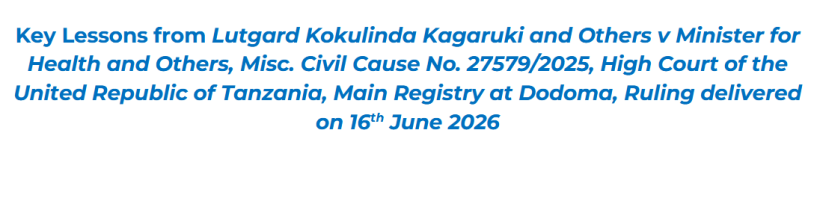
Legal and Human Rights Centre (LHRC) has highlighted important legal lessons from the High Court of Tanzania ruling in Lutgard Kokulinda Kagaruki and Others v. Minister for Health and Others, Miscellaneous Civil Cause No. 27579 of 2025, delivered on 16 June 2026 in Dodoma.
The case arose from a constitutional petition raising concerns about tobacco farming and production, public health, children’s rights, environmental protection and Tanzania’s obligations under the World Health Organization Framework Convention on Tobacco Control (WHO FCTC). The applicants sought, among other remedies, orders requiring the Government to cease tobacco farming and production and fully implement the Convention.
The original petition was dismissed on 25 September 2025 after the applicants failed to file written submissions within the prescribed timeframe. They subsequently applied to set aside the dismissal to allow the case to proceed to a determination on its merits.
In its analysis of the ruling, LHRC highlights that the Court’s decision provides important guidance on constitutional petitions and public interest litigation. The key lesson is that written submissions assist the Court in understanding legal arguments but do not constitute evidence. In constitutional cases, affidavits and annexures provide the evidentiary foundation for establishing alleged constitutional violations.
The analysis further explains that dismissal for want of prosecution does not, by itself, determine the substantive rights in dispute. Where the law permits, such a dismissal may be set aside. The doctrine of functus officio does not automatically prevent a court from reconsidering a dismissal order in these circumstances.
LHRC notes that these principles are important for organisations pursuing public interest and strategic litigation, as they emphasise the need for strong evidentiary records while recognising that procedural shortcomings may be addressed through appropriate legal applications. The lessons also relate to access to justice and effective remedies under the Constitution of the United Republic of Tanzania and relevant international and regional human rights instruments.
Although the ruling did not finally determine the constitutional claims concerning tobacco production, it provides important lessons on procedural fairness and the handling of constitutional petitions in Tanzania.
Download the full document here

